Rembrandt Today Educational Project (C)
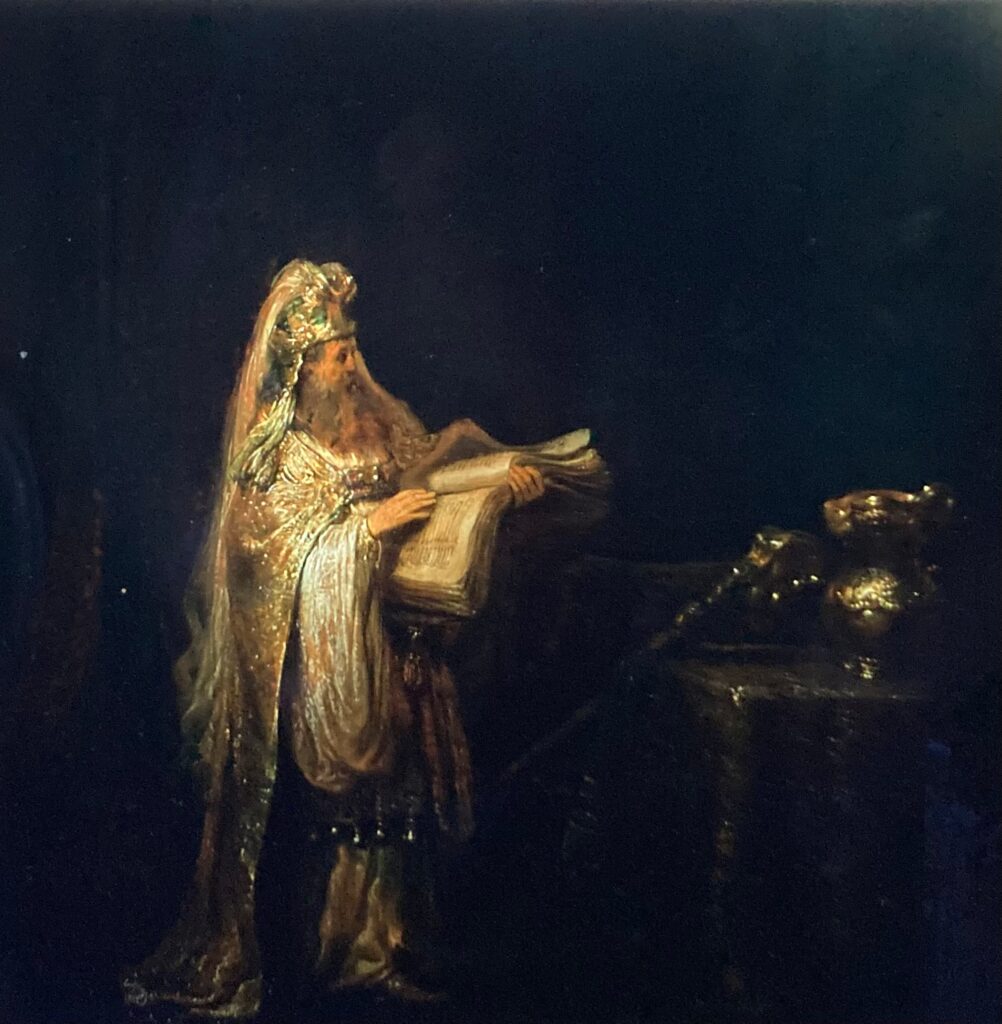
In early March 2026, the leading Rijksmuseum in Amsterdam announced major news in the arts world. After two years of meticulous research using the newest techniques and equipment, the museum was able to confirm Rembrandt’s authorship of the impressive Vision of Zacharias in the Temple work.
There is a certain art detective with regard to this mid-size painting, as it is the case with many of Rembrandt’s works. Due to the fact that the work, painted over an oak two-part panel , was largely in the private hands, it had been publicly exhibited only thrice for all 383 years of its existence, in 1898 in Amsterdam at the Stedlija Museum, followed by Fred Muller art dealers show in 1906, and public exhibition in Paris in 1911. Some time later it became part of the Royal collection in the Netherlands, and specifically the personal collection of Wilhelmina, the Dutch legendary monarch. Such history of the work has set the fact that it was seen publicly the last time a bit over a century.
As the art historians and art connoisseurs aware of, the authenticity of Rembrandt’s oeuvre is taken extremely seriously and rigorously in the Netherland, with existence and work of a special commission, an experts panel which is the most authoritative body, traditionally, in the cases of authentications.
As it happened, in 1960, the work in question, Vision of Zacharias in the Temple, was removed from the existing Rembrandt’s Catalogue Raisonne and re-attributed as the work of the Rembrandt School.
Being in the possession of a European private art collector who prefers anonymity, the work was continuing its hidden life away from the public eye.
A couple of years ago, the current owner decided to ask a very able conservators at the Rijksmuseum to have a closer look at the work – with the agreement for a long-term loan to the prolific museum. During their most modern research, the Rijksmuseum team was able to prove several key-facts supporting the Rembrandt’s authorship of the work, including the way of signing the work – which he did on the wet paint, thus proving his authorship decisively, additionally to several other key-things.
Interestingly, the research was able to find and state not only the age of the oak panel which Rembrandt used for the work, but also the place where the oak was growing – this is 383 years ago. The place turned out to be Lithuania.
With the ability to be so precise on the details of oak panels used for the painting, the conservators team of the Rijksmuseum was also able to be more precise on the dating of the work.
Previously, given the details which were known to the French art dealer Albert Lehmann from whom the work was acquired to the Queen Wilhelmina collection, the work was catalogised in the Dutch Royal collection as dated approximately 1631 or 1932.
Now, with full assuredness, the Rijksmuseum’s researchers identified the year when Rembrandt painted his Zaharias as 1633.
Coming almost four hundred years back, we can see a young, 27-year Rembrandt who has recently, just a couple of years back, moved to Amsterdam from his native Leiden, and who was working fiercely trying to establish his reputation and business in the Dutch capital. For that very reason, Rembrandt was busy largely with portraits in that period of his life.
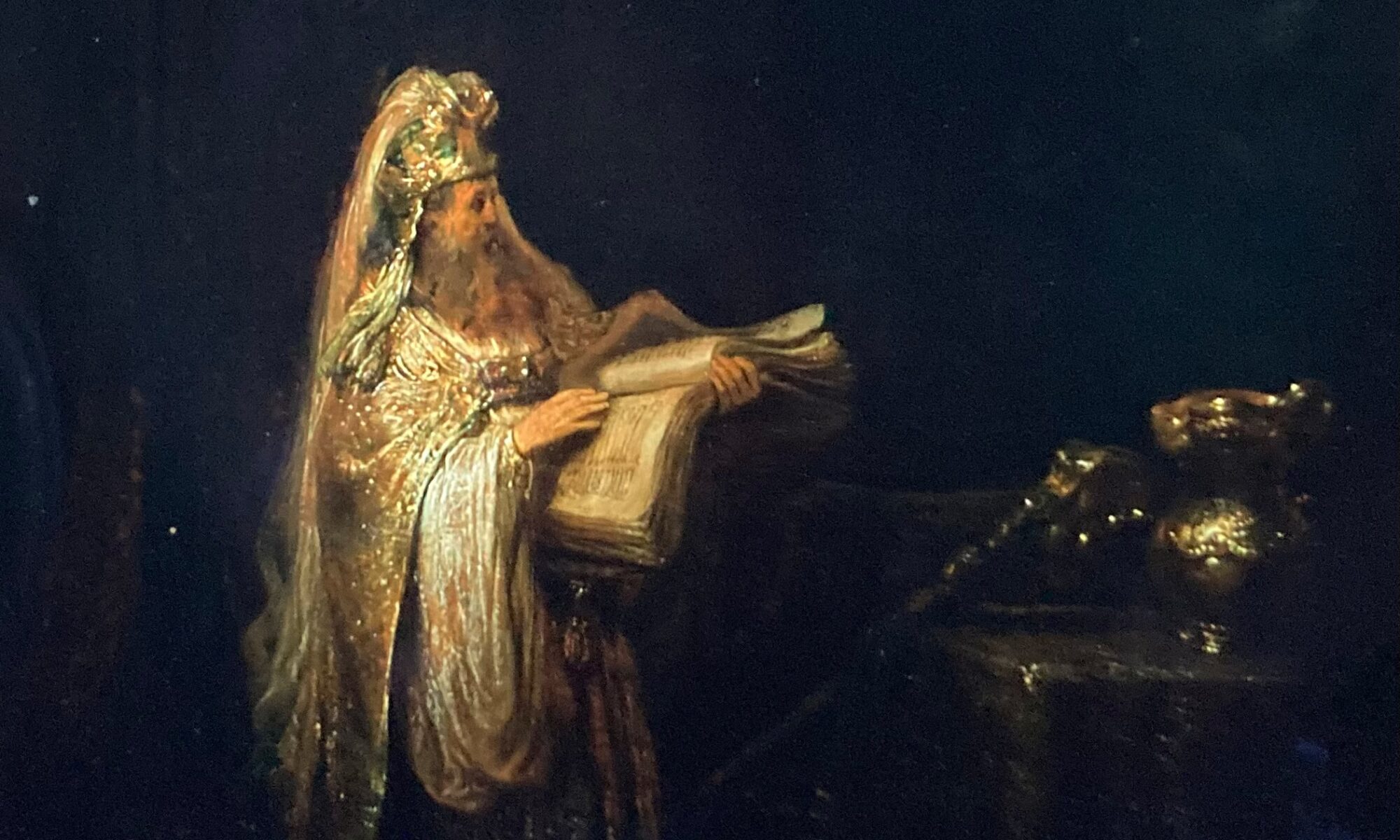
So, even not a large one, 56 x 48 cm, work on the Biblical topic is not the thing that comes to mind of Rembrandt’s experts for that period of his life and work. The painting depicts the episode in which elderly Zacharias is told in a vision that despite their both old age, he and his wife will become the parents of John the Baptist. The vision has amazed Zacharias deeply.
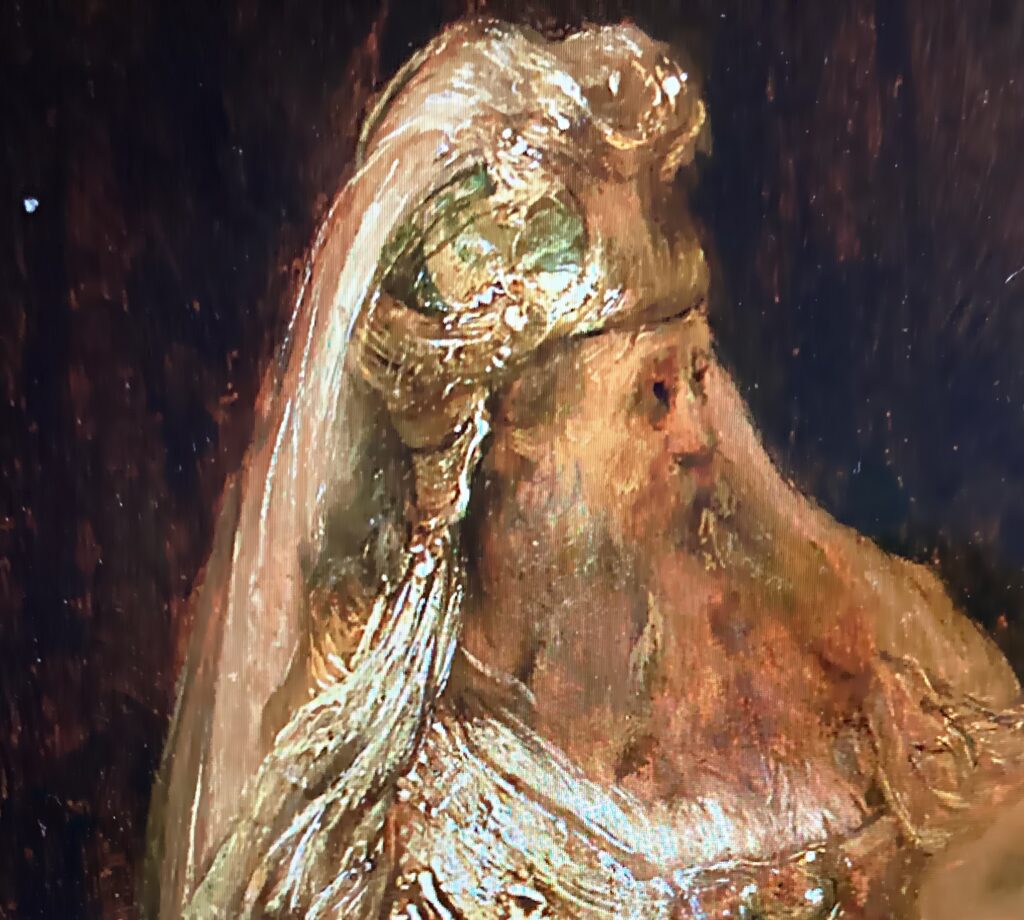
From this point of view, the re-discovery of this work is yet more significant.
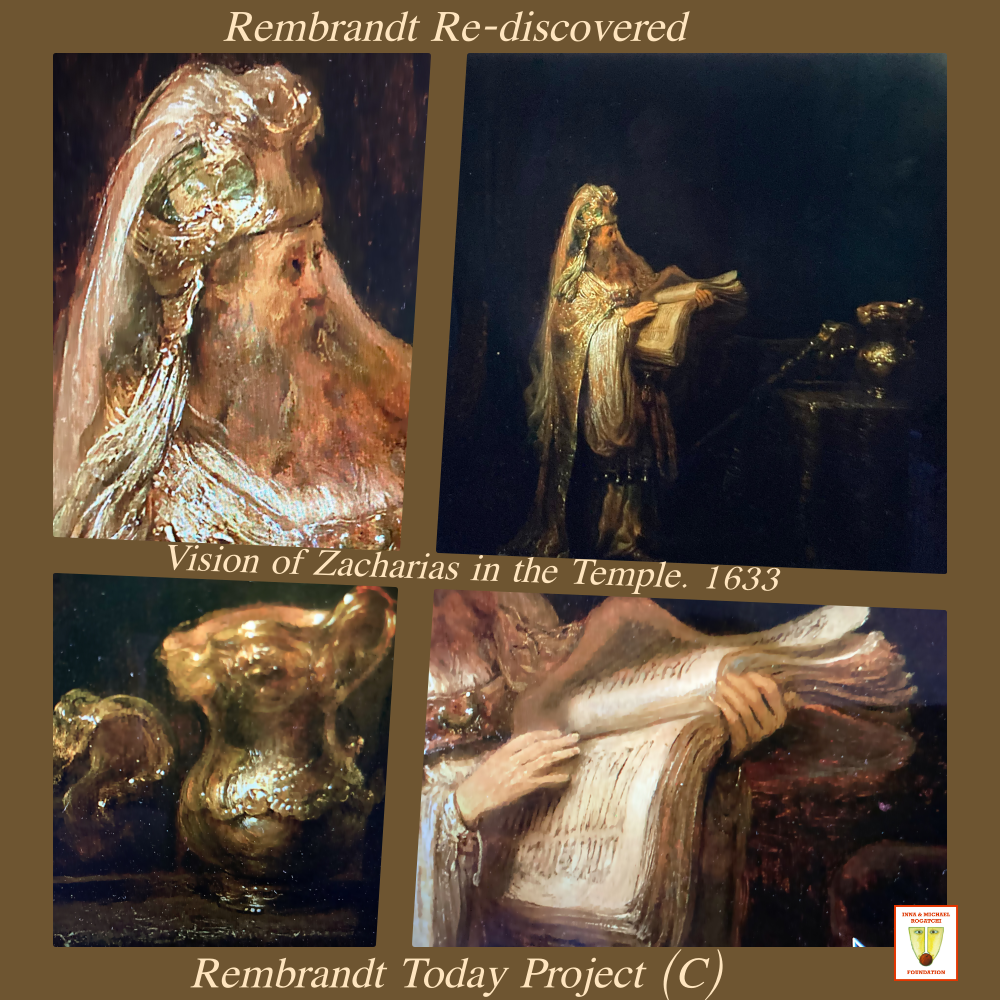
In the work itself, the composition is bold and daring for a 27-year old painter who had become noticed by the art connoisseurs of his time just three years ago, when he was 24. With a lot of air surrounding the figure of Zacharias, and a masterly bringing the table in the low corner, with an emphatically large manuscript almost suspended in the air being supported by Zacharias hands only, this is amazingly modern.
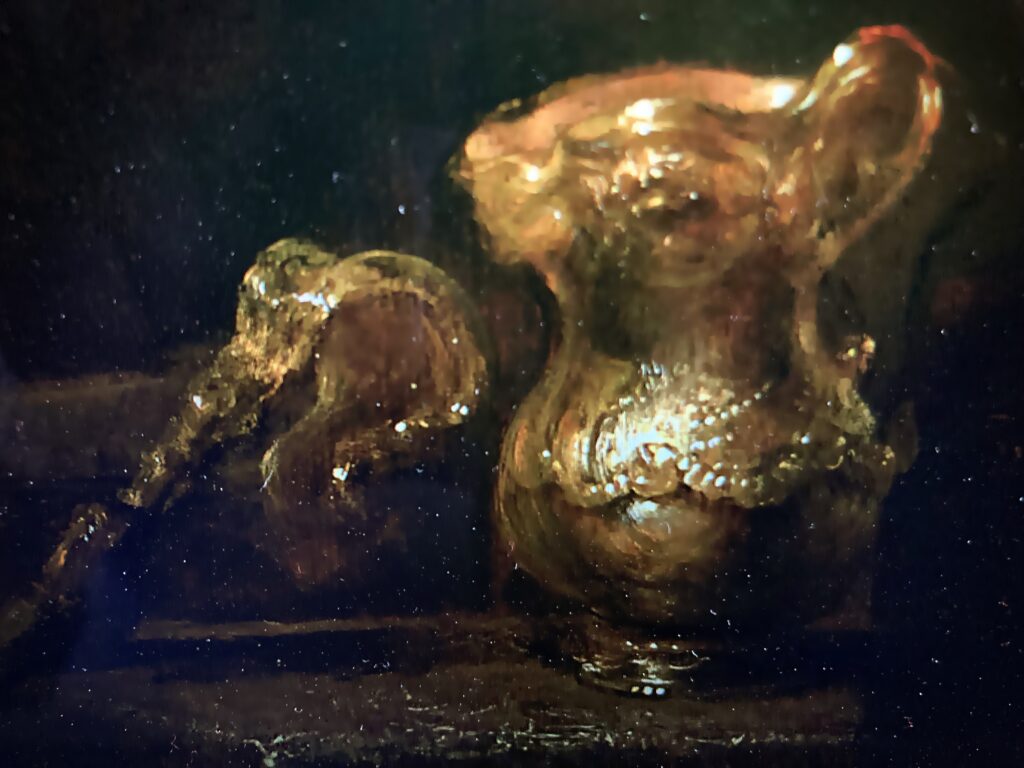
The details are very expressive and masterly done as well, especially the silver vase, and that large manuscript which is done by young Rembrandt with such mastership that one can almost feel its weight. How did he do it? When we have no answer to this natural question and emotions behind it, it means that this is an art, an Art with a capital A in question.
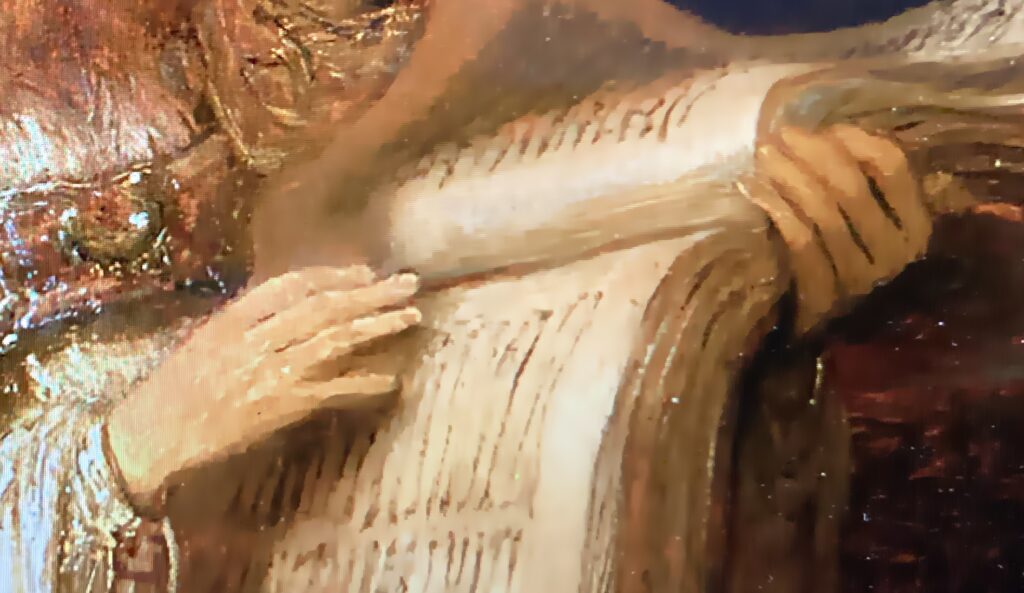
But the most amazing element of this rare in all senses painting is Zacharia’s hands. They are amazing. Fine, live, living. With elements like that in the mid-size artwork painted on an oak panel almost 400 years ago, there is a real dialogue between its master and his time and us today, looking at his work with gratitude and amazement.
Fortunately, after a century of obscurity, from now on, this newly re-attributed masterpiece of young Rembrandt will be on display at the Rijksmuseum in Amsterdam. A great work by the Rijksmuseum researchers, and such a joy for all those who feel as attached at many levels to that incredible master who has become the source of profession and vision for generations.
March 2026 © IR
————